


Power Supply & Switchgear Solutions: Ensuring Uninterrupted Security Operations
- UENI UENI

- Nov 18, 2025
- 11 min read
Updated: Dec 3, 2025
Picture a busy hospital in Atlanta just after sunset. Critical care areas depend on steady power for secure entry, patient monitoring, and rapid-response communications. Suddenly, lights flicker. Surveillance cameras stutter, access control panels freeze, and corridors shift from open access to lockdown in seconds - the outcome of an unexpected outage. Staff scramble as digital authentication halts, visitors remain stranded at biometric doors, and potential compliance gaps open wide. The immediate consequences risk not only asset safety but patient privacy, operational continuity, and institutional reputation.
No facility - be it hospital, data center, or municipal office - operates independently of the circuits and switchgear routing power beneath its walls. As modern security systems converge with advanced biometrics and real-time analytics, the expectation shifts toward always-on coverage. Unplanned downtime now exposes organizations to heavy costs: stalled operations, lost transaction data, and penalties for failure to meet regulatory demands.
This landscape demands a strategic approach to power supply design. Industrial switchgear and high-availability backup systems are not optional add-ons but the core foundation supporting every layer of physical and digital protection. Failure to address these underpinnings invites far more loss than the investment required for robust infrastructure.
Security Boost LLC's work in Atlanta and across the nation demonstrates how practical expertise turns these technologies into measurable value: uninterrupted surveillance, legally compliant transaction records, and smooth access control - no matter the weather or grid condition. Knowing what's at stake, decision-makers deserve guidance that demystifies the technology and delivers ROI through everyday reliability and future-ready platforms.
Understanding Power Supply Vulnerabilities in Security Environments
Unexpected power loss tends to hit hardest where disruption costs run high - surveillance rooms, data centers, and financial hubs. Across metropolitan Atlanta and the broader Southeast, reliability challenges stem not just from grid instability but from natural forces and human error. Utility outages triggered by severe thunderstorms or hurricanes persist through Georgia's summer, causing more than 345 reported incidents in Atlanta alone over the last three years. Equipment failures, outdated local grids, and mistakes during repairs or upgrades add further threats to system stability. Scheduled maintenance rarely synchronizes with security requirements, making timing as critical as the infrastructure itself.
The practical fallout of these disruptions proves immediate and expensive. Loss of power suspends real-time video monitoring, eliminates biometric authentication, freezes access controls, and invalidates secure payment transactions mid-flow. Most critically, failed data retention exposes sensitive operations - financial transactions left incomplete or healthcare patient records compromised due to sudden shutdowns.
Sector-Specific Risks
Healthcare: Unprotected entrances risk regulatory non-compliance and endanger patient safety during downtime. Credential-based door access becomes unreachable when support from backup systems or well-maintained switchgear installation is lacking.
Financial Services: Brief lapses ground transaction processing and escalate fraud risk. Data already at rest often faces integrity attacks once monitoring tools go dark.
Industrial & Commercial: Assembly lines stall without monitored access, raising insurance claims and causing production delays that ripple along supply chains.
Government Operations: Interruption weakens assurance for classified data environments and can halt the digital workflows municipal functions now depend upon.
Uninterrupted operations no longer represent a luxury but a demand driven by shifting local population density and heightened infrastructure complexity. Atlanta's rapid expansion means multi-tenant buildings, smart city initiatives, and integrated campus environments multiply these risk exposure points. Security Boost LLC's land-by-land knowledge - from high-rise install-site constraints to distributed financial IT deployments - targets failed nodes as they arise rather than waiting for major incidents to force retrofits.
Compliance violations arise quickly after security coverage drops out, exposing every affected organization to legal action or penalties under sector regulations. Operational paralysis builds further liability; even short periods offline deliver tangible losses in both revenue and reputation. The pressure falls squarely on effective power backup systems and reliable switchgear solutions to guard mission-critical functions - whether through generator integration, battery arrays, or well-planned installation protocols suited to the client's unique demands.
How Switchgear and Power Supply Systems Safeguard Security Operations
Electrical switchgear forms the backbone of a resilient security power infrastructure. In essence, switchgear governs the flow of electricity across a facility, segmenting supply to safeguard against potentially crippling failures. By isolating faults quickly and automatically, properly configured switchgear stops localized problems - such as short circuits - from escalating into wider shutdowns. This containment protects critical security systems: surveillance cameras remain active, access doors stay operable, and transaction servers continue processing, even as nonessential circuits disconnect for safety.
An effective switchgear installation reflects both environment and operational risk. Industrial switchgear powers high-capacity production lines and warehouse networks, often requiring extra busbars or arc-flash protection. Commercial switchgear prioritizes uptime for retail spaces and public buildings, so automated transfer switches handle switchover to backup energy within seconds, covering biometric kiosks or perimeter alarms without delay. In data center contexts, complex configurations maintain isolated redundancy blocks; these support cloud-based authentication tools such as Security Boost LLC's IDEN 2GO and ensure all digital access traces are recorded without interruption.
Backup power systems extend this safety net when grid feed is lost. Security Boost LLC typically integrates:
Automatic transfer switches (ATS): Seamlessly detect electrical interruption; transfer selected loads to generators or uninterruptible power supplies with minimal human oversight.
Generator sets and UPS arrays: Provide scalable electricity for protected zones - allowing camera feeds to buffer critical data mid-outage and biometric locks to process high-assurance identity checks without pause.
Load balancing mechanisms: Spread demand efficiently across available capacity so no single subsystem fails from overload, regardless of whether supporting an access point cluster or a biometric payment terminal like INSTA PAY.
Real-World Outcomes & Quantifiable Value
Security Boost's recent project in a multi-tenant government complex demonstrated how coordinated switchgear installation linked with generator-backed UPS achieved zero minutes of access control downtime during two separate grid outages in twelve months. Working with distribution panels divided by functional area - with prioritized routing for surveillance, biometric scanning lanes, and secure network gear - the engineered solution trimmed the average incident response window by over half compared to the previously reported regional baseline.
This outcome had direct financial effects. Analysis showed that every hour of lost coverage meant approximately $12,000 in preventable losses due to halted operations and security incidents - figures provided post-event by building management under NDA. For less than half this sum on an annualized basis, robust integration of ATS units and continuous health monitoring resolved compliance risk and slashed insurance claim triggers tied to unauthorized access attempts during disruptions.
The Case for Planned Resiliency
No off-the-shelf combination adequately addresses facility-specific risks without tailored installation and ongoing tuning. Security Boost LLC's layered approach joins switchgears, battery arrays, remote analytics, regular testing cycles, and adaptive SCADA (supervisory control and data acquisition) feedback to close all common modes of failure. Each component matters, but their synergy defines true resilience: doors never stuck open after brownouts; payment terminals reboot without dropped transactions; incident logs are preserved for legal review. Investment in these power backup systems rarely matches the cumulative penalty of compliance breaches or persistent service gaps over months or years.
In critical infrastructure environments where reliability governs reputation - and regulatory fines loom close behind - integrating dependable switchgear and backup supply elevates every other security investment. Stability here anchors trust across your technology stack.
Choosing and Implementing the Right Switchgear Solution: Best Practices for Operations
Selecting the right switchgear and power supply setup for security operations starts with one crucial fact: no two facilities have identical risks or requirements. The decision has direct impact on uptime, regulatory alignment, and resource allocation. To bridge these gaps, a process-driven approach outperforms product-centric thinking.
Assessment: Matching Infrastructure to Operational Stakes
Effective planning begins with a comprehensive site evaluation. Identify the highest-priority security loads - whether biometric authentication stations, surveillance nodes, or data vaults - for uninterrupted operations. Map existing electrical architecture: older buildings, especially those retrofitted or expanded over decades, often conceal load bottlenecks or legacy wiring incompatible with modern industrial or commercial switchgear standards.
Compliance drives choices. Facilities handling financial or healthcare records require documented assurance that backup paths and isolation protocols uphold both data integrity and regulated access during outages. Security Boost LLC documents these requirements in coordination with compliance auditors to clarify must-have features before design work begins.
Design and Switchgear Selection Criteria
Capacity Matching: Calculate aggregate critical load and future growth to choose appropriately scaled switchgear and backup energy.
Compatibility: Seamlessly integrate new systems with legacy control panels, generator starters, biometric access nodes, and real-time analytics engines - reducing points of failure.
Response Timing: For severe weather risk zones and other sites, design switches and ATS units for minimal changeover delay under grid duress.
Regulatory Fit: Choose equipment certified for sensitive applications (IEC/ANSI compliance), including features like arc-flash reduction, which protect both staff safety and operational data.
Installation Procedure: Ensuring Process Integrity
Site Preparation: Clear redundant circuits; bolster grounding infrastructure in older properties where surges are likely.
System Deployment: Set switchgear cabinets and associated transfer switches using designs tuned to power flow diagrams - not generic blueprints. All cable routes follow clearly marked labeling for accelerated emergency troubleshooting.
Integrated Testing: Employ staged failover drills - simulating both abrupt blackouts and slow sags - to validate seamless support for every protected circuit (from locked access points through cloud monitoring nodes).
Documentation & Compliance Verification: Maintain full records for regulators and insurers; supply building operators roadmaps for routine checks or escalation calls.
The Security Boost LLC Advantage: Service Depth Meets Local Expertise
Reliability hinges on expert design and execution as much as hardware quality. Security Boost's credentialed team combines rigorous technical training with up-to-date knowledge of National code requirements and hazard profiles - including how urban grid congestion or shifting storm patterns alter deployment decisions.
Consultation: Translating security priorities and site constraints into phased implementation plans built around operational realities.
Turnkey Installation: End-to-end project management keeps disruption to a minimum - essential when security uptime cannot pause for upgrades.
Emergency Support and Remote Monitoring: Real-time troubleshooting minimizes exposure during peak threat periods; remote tools instantly detect anomalous performance, averting silent failures that invite larger disruptions.
Proactive Maintenance: Scheduled health checks and predictive service keep systems within spec long after installation - crucial as client's electrical environment evolves year by year.
The business landscape demands resilient power solutions tailored to unique local risks - rapid storm surges, dense downtown construction zones, or complex campus networks.
Relying on proven providers like Security Boost LLC stacks real-world outcomes in your favor: fewer shutdowns, reduced liability exposure, and confidence that compliance hurdles stay managed. Supplementary tools are available on request - downloadable planning guides break down the decision-making process step by step; live consultation chat connects you directly with credentialed engineers to address immediate questions about switchgear installation specifics or threat assessments.
ROI and Long-Term Value: Quantifying the Business Benefits of Reliable Power for Security
Measuring Return on Investment for Power Resiliency
The true financial return of investing in robust power backup systems comes into focus the moment regular operations face a power event. For organizations across the nation, lost uptime is not theoretical; industry data repeatedly points to average direct losses exceeding $8,500 per hour for commercial sites, with critical infrastructure costs ballooning beyond $25,000 as security failures trigger regulatory penalties and incident response mobilization. These figures persist year after year in financial, health, and government sectors struggling with aging grids and unpredictable weather patterns.
A regional financial firm recently modernized its electrical switchgear and deployed dual-redundant UPS through Security Boost LLC. When two grid failures struck during separate high-volume transaction periods, their biometric payment infrastructure - supported by automated power switchover - remained active. Unlike neighboring institutions facing system resets or compliance-conflicting downtime, this site processed thousands of transactions without fraud exposure or client friction. Scheduled reporting showed compliance auditors monthly uptime well above regulatory minimums and zero claims related to power-driven incidents, resulting in a 17% drop in annual cyber liability insurance premiums.
Business Impact Areas
Loss Prevention: Reliable switchgear limits security blind spots and illegal entry opportunities from sudden outages.
Regulatory Compliance: Quality backup power ensures credentialed access remains logged and operational data protected throughout every outage - reducing threat of warnings or fines from state oversight bodies.
Customer Trust: Service continuity during outages protects not only immediate revenue but also longer-term reputation. Clients are unlikely to stick with facilities where access cedes to blackout or payments freeze mid-operation.
Reduced Insurance Exposure: Automated systems validated through documented failover minimize claim triggers and often lower carrier risk assessments over time.
Staff Productivity: Automated isolation of faults - for instance, segmenting a failed panel rather than taking whole zones offline - means less manual intervention and faster workflow recovery once supply stabilizes.
Navigating Upfront Cost Concerns
Skepticism over initial outlay fades under actuarial analysis: even conservatively modeled, the compound cost of compliance failures, disrupted workflows, and data loss over just two unscheduled outages can outstrip the capital invested in a professional switchgear installation. In industrial deployments where minutes matter for process safety, bypassing these investments leaves major assets perpetually at risk; business studies document up to a six-month improvement in overall payback when sites modernize for uninterrupted operations.
Security Boost LLC designs for long-term scalability; each integrated system supports future upgrades - ensuring your security landscape keeps pace with evolving regulatory or technological requirements. Maintenance services, remote monitoring portals, and periodic systems revalidation extend solution value year-over-year instead of trapping clients in static setups that date quickly as risks shift.
An Open Invitation to Quantify Value
Tangible benchmarks guide smart decision-making. Security Boost LLC consults on custom ROI assessments drawing from typical clients' recent incident data; proprietary calculators estimate both direct savings and opportunity protection unlocked by dependable switchgear strategies. Request a tailored analysis to weigh how industry standards - and your current operational vulnerabilities - shape measurable long-term gains.
Future-Proofing With Integrated Power and Security Solutions
Rapid advances in threat technology and criminal tactics are pushing commercial and critical infrastructure sectors to rethink static security. Attacks now traverse both physical layers and digital entry points, striking access systems, payment terminals, and remote data feeds with equal force. Surveillance servers and biometric readers offer little defense if they falter during an outage - or if integration gaps leave visibility blind spots.
Security Boost LLC invests directly in layered power and security coherence for these environments. By developing keystone technologies like

(biometric identity management) and

(biometric-secured payments), the company builds platforms adaptable for future compliance rules and attack vectors. Pending patents protect solutions already setting service benchmarks - but it's the approach to power continuity that sets apart their scalable systems.
Resilient infrastructure rests on unified operation; successful switchgear installation underpins all advanced feature layers without interruption or hidden dependencies. Robust power backup systems, mapped to a facility's precise load and risk posture, keep networked door locks authenticating each user even while switchover events reroute current. Surveillance streams continue feeding analytics - cues harvested in real time - so response is not lost to the blind minutes of grid recovery.
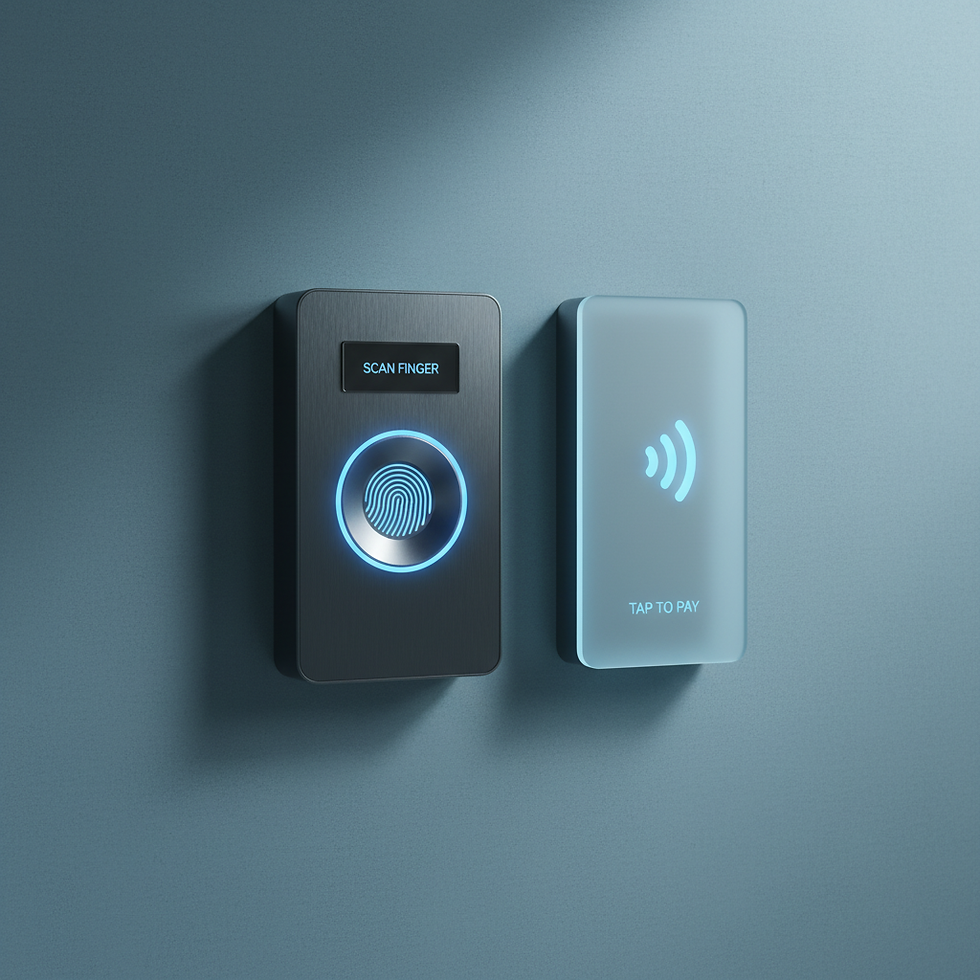
Biometric authentication: Identity kiosks operate seamlessly across rolling outages, protected by continuous load balancing within coordinated switchgear arrays.
Transaction security: Payment endpoints built around

process high-value operations without data loss, even though consecutive storms or utility failures.
Remote monitoring: Facility operators retain analytics and incident logs throughout supply interruptions, supporting both compliance reviews and rapid post-event audits.
Automated power management: Real-time load regulation adapts instantly to unpredictable stressors, never exposing critical zones to uncontrolled shutdown.
These elements converge as hardwired resilience - not simply an overlay, but a fully integrated solution stack built for the realities governments and businesses face: evolving attack surfaces, regulatory pivots, demand surges brought on by campus expansions, or climate volatility.
The true business value grows over time. When faced with regulatory shifts or new client requirements, this adaptable architecture eliminates the need for disruptive retrofits. Staff productivity benefits from always-on platforms; client trust endures through seamless operations. Investments made today under expert guidance ensure straightforward compliance tomorrow even as standards evolve.
Security Boost's engineering teams maintain region-specific expertise: every project draws on decades of local operational insight coupled with a round-the-clock service commitment - essential when safeguarding uninterrupted operations becomes a daily concern. Their ability to stay ahead in system design, field support, and compliance intelligence sets a practical foundation for businesses determined to meet the future's risks with proven technology advantages.
Every layer of a security environment - biometric identification, access control, real-time monitoring - relies on one invisible constant: uninterrupted power. Weaknesses in switchgear design or backup supply planning jeopardize everything from compliance standing to business continuity, exposing assets and people to real financial risk when outages strike. Neglecting robust infrastructure can result in costly regulatory penalties, hurt reputation, or trigger insurance challenges that undermine even the best security strategies.
A future-proof approach means security posts never go dark and transaction streams remain protected regardless of utility conditions or severe weather. Decision-makers gain real ROI by investing in power systems designed for their specific operational loads and risk profiles. Security Boost LLC stands out by combining decade-deep local experience with innovative technologies like

and

- ensuring every installation adapts as threats evolve and compliance rules shift.
Ready to remove uncertainty from your security operations? Explore a tailored consultation with Security Boost LLC, download detailed planning tools, or start a live chat with a credentialed engineer to clarify next steps for your facility. Backed by a legacy of Transparency, Integrity, Reliability, and Experience (T.I.R.E), this Atlanta-based team keeps critical security systems running 24/7/365 - empowering leaders to secure their assets, safeguard people, and drive unmatched uptime in any operational scenario.
Comments